


One Day in Etretat, France: Cliffs, Impressionists and Les Jardins d’Étretat

Updated: Jul 30
Often, the best part of a long journey is the sudden shift in landscape—that exact moment the urban noise gives way to salty sea breezes and open horizons. As we neared the final stretches of our cross-European road trip from Amsterdam to London, trading high-speed highways for winding coastal routes became a favourite part of our journey. I have to admit that I knew little about Etretat, France, a small coastal town in Normandy. My ATB (Approved Travel Buddy) had included it on our itinerary, telling me we would see beautiful chalk cliffs. I am so glad she did, for this was one of my absolute favourite stops on this year's European adventure.

By this point, we had enjoyed a wonderful road trip (after my very rough start). We had traded my travel chaos for canal-side calm in Bruges, caught a few magical hours in Ghent, and reflected on history along the blustery shores of Dunkirk. Further south, we indulged in bubbly bliss across Reims and Épernay, spent a few hours in Amiens admiring its grand cathedral, wandered timber-framed streets during one day in Rouen, and marvelled at the soaring tides on a Mont-Saint-Michel day trip.
Yet, pulling into Étretat felt entirely distinct. Tucked dramatically between towering alabaster cliffs, this coastal village offered a peaceful pause—a place where wild geological wonders and human creativity blend into something truly extraordinary.
Table of Contents
History, Impressionism & Legendary Rogues
Étretat's identity has been shaped by time, water, and imagination. Long before it became a bustling seaside resort in the 19th century, Étretat was a modest fishing village nestled along Normandy’s Côte d’Albâtre (Alabaster Coast). Over millions of years, nature carved out dramatic white chalk cliffs that plunge into the icy blue English Channel, sculpting natural arches and needle-like spires that feel almost too fantastical to be real.

It didn't take long for artists to fall under its spell. During the 1800s, Étretat became a sacred sanctuary for Impressionist painters seeking to capture the fleeting shifts of light, roaring waves, and moody coastal skies. Claude Monet was particularly obsessed with the town's distinct rock formations, returning season after season to paint over 80 canvases here. Alongside fellow masters such as Eugène Boudin and Gustave Courbet, Monet immortalized the play of light and colour across the limestone arches, forever linking Étretat to the heart of the Impressionist movement.
"If I had to show a friend the sea for the first time, it would be at Étretat." — Eugène Boudin
Beyond the brushstrokes, Étretat holds a mysterious literary legacy. The town is inextricably linked to Maurice Leblanc, the author who created Arsène Lupin, France’s iconic "gentleman burglar." Leblanc spent many summers at his home here (Le Clos Lupin, now a charming museum), and he famously chose Étretat's towering 70-metre hollow rock needle—L'Aiguille—as the secret hiding spot for the stolen treasures of the Kings of France in his famous stories. Standing on the shoreline, looking out at that solitary stone spike, it’s impossible not to feel a thrill of literary intrigue blending with the coastal scenery.

Top Things to See and Do in Etretat, France in a Day
Exploring Étretat’s Charming Historic Town Centre
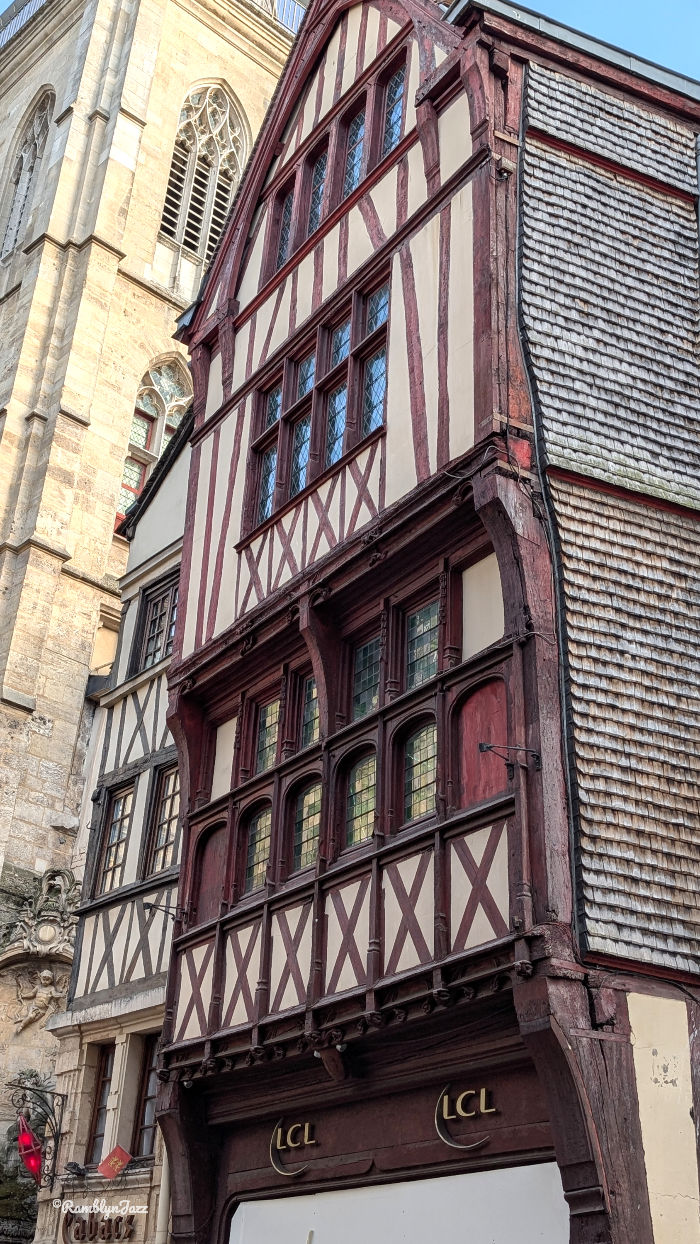
After parking in the lot near the old railway station, we began our day by losing ourselves in Étretat’s historic town centre, a delightful maze of narrow streets, half-timbered Norman buildings, and inviting cafés and crêperies. The heart of the town beats around the Place Maréchal Foch and the Vieux Marché—a magnificent covered wooden market built in the traditional style. The entire centre carries a wonderfully relaxed coastal energy, perfect for grabbing a morning espresso and warm pastry before heading up into the sea breeze.
Taking Le Petit Train Up to the Cliffs
After wandering through town, we decided to catch Le Petit Train d’Étretat. While energetic hikers often tackle the steep stairs on foot, this charming open-air tourist train offers a wonderfully scenic, stress-free alternative to climbing the dramatic incline to the Falaise d'Amont. The brief journey winds upward along the hillside, offering glimpses of the village below nestled between the giant chalk walls. Opting for the train saved us precious time and energy, ensuring we arrived at the summit feeling refreshed and ready to spend hours exploring the gardens and headlands without exhaustion.

The Cliffs & Rock Formations
Stepping off the train onto the high coastal plateau instantly takes your breath away, not only because of the stunning beauty, but also from the strong winds whipping our hair and clothing. Standing atop the headlands, the view opens across the shimmering English Channel and the majestic white arches that have inspired centuries of art and legend. To the south lies the famous Falaise d’Aval, a massive natural arch paired with the 70-metre standalone limestone needle, L'Aiguille, rising directly out of the breaking waves like a giant tooth.

Looking back on Falaise d’Amont, you are greeted by the serene stone profile of the Chapelle Notre-Dame-de-la-Garde, a solitary sanctuary built to protect the local sailors and fishermen. Walking along the windy cliffside paths, watching seabirds soar level with your eyes while the waves crash far below, is a deeply humbling and unforgettable experience.

Spotlight: Les Jardins d’Étretat
While we expected the coastal views from the cliff tops to be breathtaking, nothing prepared us for the complete wonder of stepping into Les Jardins d’Étretat. To say this site caught us by surprise is an understatement—it quickly became the absolute jewel of our day. We went in anticipating a traditional, pleasant botanical garden, but instead walked straight into a living, surreal wonderland where land art, avant-garde architecture, and nature converse high above the churning sea. Every turn along the winding emerald pathways brought a fresh wave of surprise, delight, and playful intrigue, leaving us completely enchanted.
The story behind these cliffside gardens is as rich as the landscape itself. The site was originally created in 1905 by Madame Thébault, a famous French comic actress and close personal friend of Claude Monet. Inspired by Monet’s passion for painting along these very cliffs, she planted the first trees and orchids, creating a private retreat to mirror his artistic vision. Over a century later, in 2016, visionary landscape architect Alexandre Grivko completely reimagined the space into an eco-friendly contemporary art park. Grivko clipped the boxwood and laurel into rolling, fluid waves of topiary to mirror the cresting ocean waves, rolling tides, and chalky cliffside contours right outside the garden walls.
Faces, Clockwork, and Soundscapes
Exploring the distinct thematic zones felt like stepping directly into a dreamscape, with each section featuring unique artistic stories. In the Jardin d’Aval (The Raindrop Garden), we were mesmerized by artist Samuel Salcedo’s Gouttes de Pluie—enormous grey resin facial sculptures embedded right into the rounded green bushes, each wearing a vivid human expression ranging from quiet contemplation to mischievous laughter.

One of the most delightful interactive surprises was discovering the Clockwork Forest by the British artist collective Greyworld. Tucked among the trees, brass winding keys emerge directly from the bark of the trunks. Turning the mechanisms winds up hidden music boxes inside the wood, filling the coastal canopy with delicate, enchanting melodies that hum alongside the sound of the wind and crashing waves.
Further along, the Jardin Avatar drew us into a whimsical, enchanted forest where Wiktor Szostalo’s Tree Huggers sculptures and subtle, interactive soundscapes, composed of recordings of the word "hello" in many languages, made the trees themselves feel vibrantly alive. Each clay sculpture resembles the sound wave produced by the words.
Practical Information for Visitors
Address: Avenue Damilaville, 76790 Étretat, France (located on the summit of Falaise d'Amont).
Opening Hours: Open daily from mid-March through November, typically operating from 10:00 AM to 7:00 PM (be sure to verify seasonal hours on the official website prior to your visit).
Admission Fees: Approximately €12.50 for adults, €7.50 for youth (ages 8–14), and free entry for children under 8.
Tips for Your Visit: Wear comfortable, sturdy walking shoes, as the garden's terraced hills, gravel paths, and stone steps require plenty of foot travel.

Final Thoughts
Spending a day here was a stark reminder of why we fell in love with travelling in the first place—for those rare, magical intersections where raw, untamed nature meets the human spirit. From the legendary literary haunts of Arsène Lupin to the quiet ghost of Monet painting along the shore, and the whimsical, living art of Les Jardins d’Étretat, this small coastal town delivered memories that will stay with us forever.

With the coastal sea air still lingering in our hair, we picked up the car at the end of a truly wonderful day and set off down the highway. Our next stop was the historic port city of Dieppe, where we planned to pause for a couple of days before continuing the final legs of our epic road trip toward London. Étretat had set a sky-high bar, but as the road unwound before us, we knew the adventure was far from over.
If you enjoy the content and would like to be updated with new posts, become a member/subscribe (it's free!) or follow along on the RamblynJazz Facebook page, BlueSky, Pinterest, Twitter, and Instagram. You can help the blog grow by sharing the link with a travelling friend or through social media. I truly appreciate your comments and encourage you to share your thoughts below.


Oh how charming, i am completely enchanted by your pictures. Well done to your ATB for recommending such a wonderful spot. I haven't heard of Etretat at all but I am glad I have now. The cliff and rock formations look similar to Durdledoor in Devon, but more spectacular here as they are made of such a pure white and pristine colouring. The gardens are excellent. Can echo the enthusiasm of other commentors, thank you for sharing your visit and not gatekeeping such a rich and lovely place.
Carolin | <a href="https://solotravelstory.com/">Solo Travel Story</a>
Wow! What a stunner of a place. I've seen pictures of Monet's paintings of the cliffs but to see them in person would be really special. I could happily spend the day wandering around the Jardins d’Étretat - I love open air art galleries where there's something new waiting to be discovered around every corner.
Well done, I'm now dreaming of a place I didn't know about 20 minutes ago. What a beauty. I love the sea views and amazing cliffs, seemingly sister cliffs to the similar south coast cliffs of England. I can see why many are inspired to represent them in various artwork. I'm not sure about the face sculptures, they're a little creepy, like those ones at Vancouver's English Bay. But the gardens I could happily explore. Either way you've got the perfect ATB with recommendations like Etretat
Oh my! From the very first photo of the dramatic rock arch I was instantly drawn to this amazing place. I knew nothing about the Alabaster Coast and now I want to go there. The town is delightfully pretty and I know we would want to learn more about the Monet and Leblanc connections (we love the Lupin anime). We would have to visit those marvellous cliffs to enjoy the spectacular views. And Les Jardins d’Étretat look sublime. Thank you for introducing us to this wonderful place, I feel the need to catch a ferry to Le Harvre immediately!