


Echoes of Operation Dynamo: A Day in Dunkirk

There is a distinct, shifting energy that takes over when you trade the peaceful, postcard-perfect canals of Belgium for the wind-swept, monument-lined coast of northern France. We were on an evocative cross-border road trip that began in Amsterdam and would eventually carry us across the water to London. Along the way, we had already enjoyed some incredible detours in Belgium—if you are mapping out your own itinerary, be sure to check out my previous posts on our stops to experience the canal-side calm of Bruges and a few magical hours in Ghent.

One of our goals on the trip, however, was deeply intentional: we wanted to trace, honour, and quietly reflect upon Second World War sites that line the English Channel coast.
To make this happen, we decided to break up the drive and spend a single night in Dunkirk before turning our wheels inland toward Reims. It is worth managing your expectations right from the start if you are planning a similar route—the reality of modern Dunkirk is that there isn’t a massive, glittering list of traditional tourist attractions. There are no sprawling art galleries or grand amusement parks here. Instead, the city’s identity, its architecture, and its most compelling sights are fundamentally, inextricably tied to those harrowing war years. It is a place built on memory, and that is precisely what makes it worth the stop.
Table of Contents
The Story of Dunkirk: Resilience, Ruin, and Rebuilding
Long before its name became synonymous with one of the most pivotal moments of the Second World War, Dunkirk (Dunkerque in French) was a prominent maritime port with deep Flemish cultural roots. Located right on the edge of the North Sea near the Belgian border, the area has always been a double-edged sword. Its strategic position turned it into a wealthy trading hub, but it also made it a highly coveted prize, resulting in centuries of sieges, naval battles, and shifting borders. It is a city that has always known how to weather a storm, but nothing in its long maritime history could have prepared it for the ordeal of 1940.
In May of that year, the town became the focal point of the world's attention during Operation Dynamo. Advancing German forces had swiftly swept through western Europe, cutting off and trapping hundreds of thousands of British, French, and Belgian soldiers against the shores of the English Channel. With their backs literally to the sea and the enemy closing in, the situation appeared entirely hopeless. What followed was a chaotic, miraculous ten-day evacuation that defied all tactical odds, rescuing over 338,000 Allied troops from the local beaches and the harbour's concrete eastern pier.

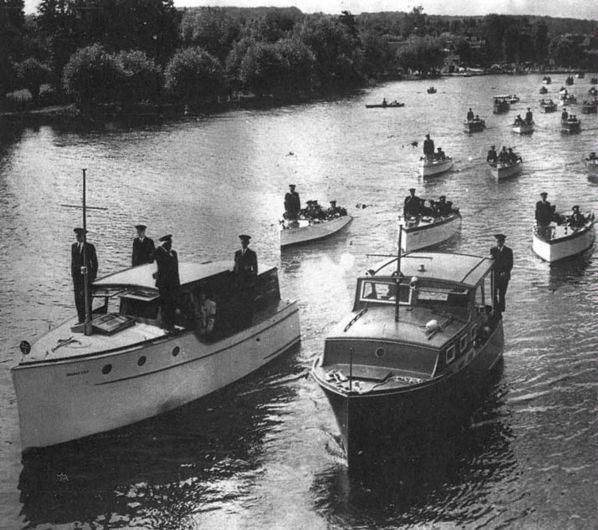
This massive undertaking succeeded only because of a legendary, makeshift armada. Alongside regular naval destroyers, an inspired fleet of civilian "Little Ships"—including private yachts, commercial fishing boats, pleasure cruisers, and lifeboats—bravely crossed the treacherous, bomb-torn waters from England to pull exhausted soldiers directly off the shallow sands. While the evacuation was a logistical triumph that ultimately saved the Allied war effort from total collapse, it exacted a catastrophic toll on the city itself.
Relentless aerial bombardments and heavy artillery fire during the evacuation, followed by years of severe occupation and final liberation battles, reduced Dunkirk to absolute ash. By 1945, a staggering 90 percent of the town had been completely flattened, leaving a scarred, unrecognizable landscape. In the decades that followed, the citizens set to work on a massive post-war reconstruction project. Rather than trying to recreate a perfect replica of the past, they rebuilt Dunkirk into a functional, modern industrial port city, all while intentionally weaving the physical reminders of their wartime sacrifice into the fabric of their new streets.

Top Things to See and Do in Dunkirk
We arrived in Dunkirk in the late afternoon, parked our rental car safely at our apartment, and immediately laced up our walking shoes. With limited daylight left, our goal was to explore as much of the city centre on foot as we could before dark, leaving the remaining historical sites on our list for the next morning after check-out.
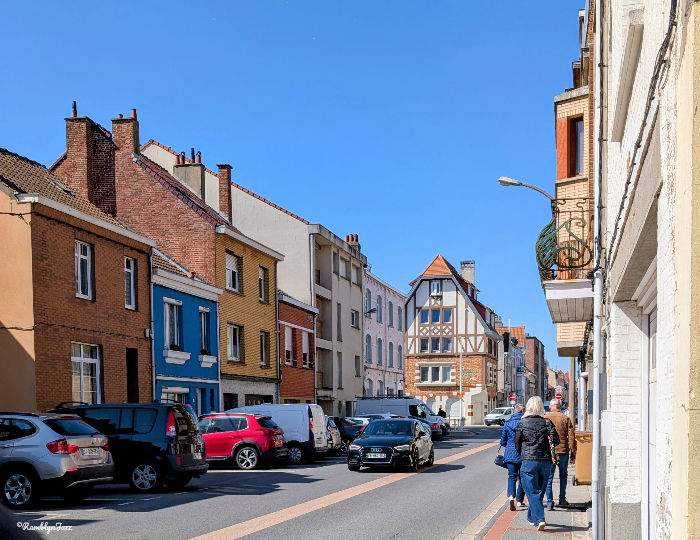
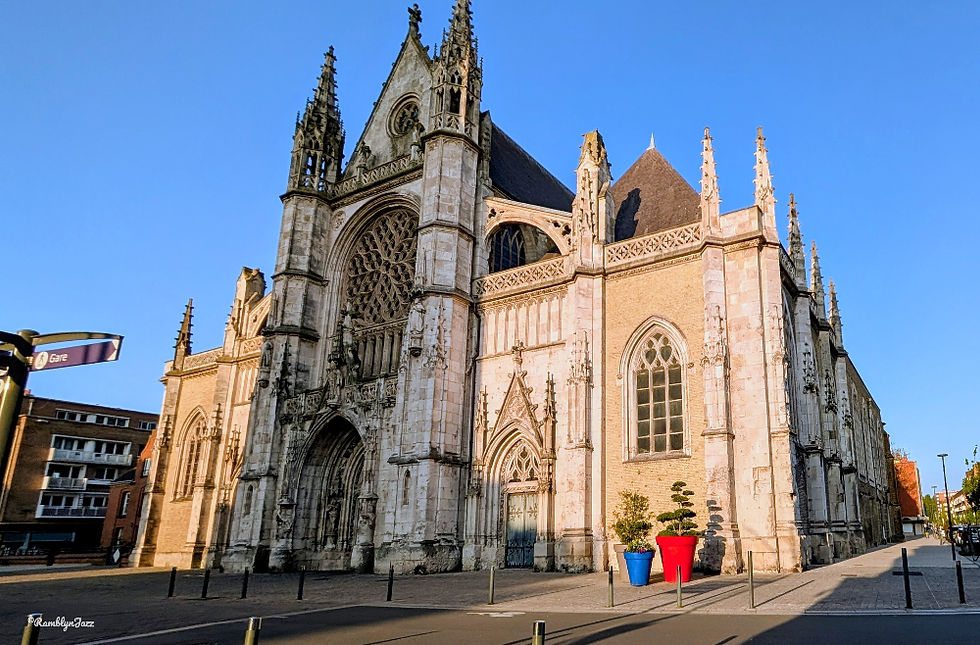
Strolling through the central squares, we admired the striking exteriors of both the Saint-Éloi Church and its commanding independent Belfry, taking in the contrast between the ancient brickwork and the modern surrounding streets. A short walk further brought us to the heart of the main square, where the proud Jean Bart Statue stood tall under the evening sky. With the twilight chill beginning to roll in from the harbour, we capped off our evening by choosing a cozy local restaurant for a relaxing dinner.
Saint-Éloi Church & The Belfry of Dunkirk
The 16th-century Gothic Church of Saint-Éloi offers a striking architectural juxtaposition against the rebuilt town centre. If you look closely at its weathered brick facade, you can still spot the scars of conflict—bullet holes and shrapnel markings left behind from both World Wars. Directly across the street stands its soaring, 58-metre-high belfry. Originally constructed as the church's bell tower, it now stands independently as a UNESCO World Heritage Site. Visitors can take an elevator followed by a short flight of stairs to the top, where they are treated to a magnificent 50-bell carillon and a sweeping panoramic view of the entire city and the coast beyond.
Address: Rue de l'Église / Rue du Leffrinckoucke, 59140 Dunkerque
Cost: Access to the church is free; Belfry admission (including the panoramic viewpoint) is approximately €4.
Hours: The church is open daily from 9:00 AM – 6:00 PM. Belfry opening hours vary by season, typically operating Tuesday to Saturday from 10:00 AM – 12:30 PM, and 2:00 PM – 6:00 PM.

The Jean Bart Statue (Place Jean Bart)
Located in Dunkirk's central square, this grand bronze monument commemorates Jean Bart, the city's most celebrated and legendary historical figure. Born in 1650, Bart was a daring naval commander and privateer—essentially a crown-sanctioned pirate—who achieved immortal status during the reign of Louis XIV by successfully capturing a massive convoy of Dutch grain ships, saving France from devastating starvation. Remarkably, while the surrounding square was reduced to absolute ruin by WWII bombardments, his statue survived the war almost entirely untouched, standing today as a symbol of local resilience.
Address: Place Jean Bart, 59140 Dunkerque
Cost: Free (Public Square)
Hours: Open 24/7

Dunkirk City Cemetery
A short distance from the immediate centre lies the Dunkirk City Cemetery, a deeply moving and reflective space that brings the true human cost of global conflict into sharp focus. While it serves as the traditional, quiet final resting place for generations of local residents, it also includes a sprawling, impeccably maintained section of the Commonwealth War Graves Commission. Here, rows upon rows of pristine white headstones mark the graves of hundreds of Allied soldiers from both the First and Second World Wars. Walking along these quiet paths offers a profound, sombre opportunity to pay your respects to those who fell during the region's darkest days.
Address: Route de Steendam, 59140 Dunkerque
Cost: Free
Hours: Open daily from 8:00 AM – 6:00 PM (hours contract slightly during the winter months).
Dunkirk Beach (Plage de Malo-les-Bains)
Today, Malo-les-Bains presents itself as a wide, beautiful stretch of northern sand lined with a lively boardwalk, vibrant, colourful beach huts, and bustling seafood restaurants. However, as you stand on the shoreline listening to the crashing waves, it is impossible not to overlay the haunting historical images of 1940 onto the horizon. This beach was the primary evacuation site where thousands of cold, exhausted soldiers stood shoulder-deep in the surf, waiting under enemy fire for rescue. If you manage your visit carefully, a trip here at low tide reveals the rusted, barnacle-encrusted remains of several ships that were part of the evacuation efforts.
Address: Digue de Mer, 59140 Dunkerque
Cost: Free
Hours: Open 24/7 (Be sure to check local tide tables if you want to spot the shipwrecks at low tide).

Operation Dynamo Museum (Musée Dunkerque 1940)
For anyone looking to fully comprehend the logistics, tragedy, and triumphs of the 1940 evacuation, the Operation Dynamo Museum is an absolute must-visit. The museum is fittingly housed inside the historic Bastion 32, a reinforced coastal bunker that served as the actual headquarters for the French and British Allied forces during the heat of the rescue operation. Inside, you will find an incredible and thoughtfully curated collection of military hardware, maps, uniforms, and deeply moving personal artifacts recovered directly from the beaches. Accompanying archival film footage masterfully stitches the narrative together, ensuring you leave with a profound appreciation for the "Dunkirk Spirit."
Address: Courtines du Bastion 32, Rue des Chantiers de France, 59140 Dunkerque
Cost: Approximately €8 for adults.
Hours: Generally open daily from 10:00 AM – 6:00 PM from April through November; the museum has limited hours or closes completely during the deep winter season.
Final Thoughts
Visiting a place like Dunkirk leaves you with a uniquely bittersweet feeling. It is a quiet, unassuming town that carries immense historical weight. Spending twenty-four hours here isn't about ticking off endless sights from a standard tourist checklist; rather, it is an exercise in mindfulness, an opportunity to stand on a modern shore and consciously listen to the heavy echoes of a generation that risked everything for freedom. The city may be small in terms of traditional attractions, but the profound sense of place and perspective it offers is vast.
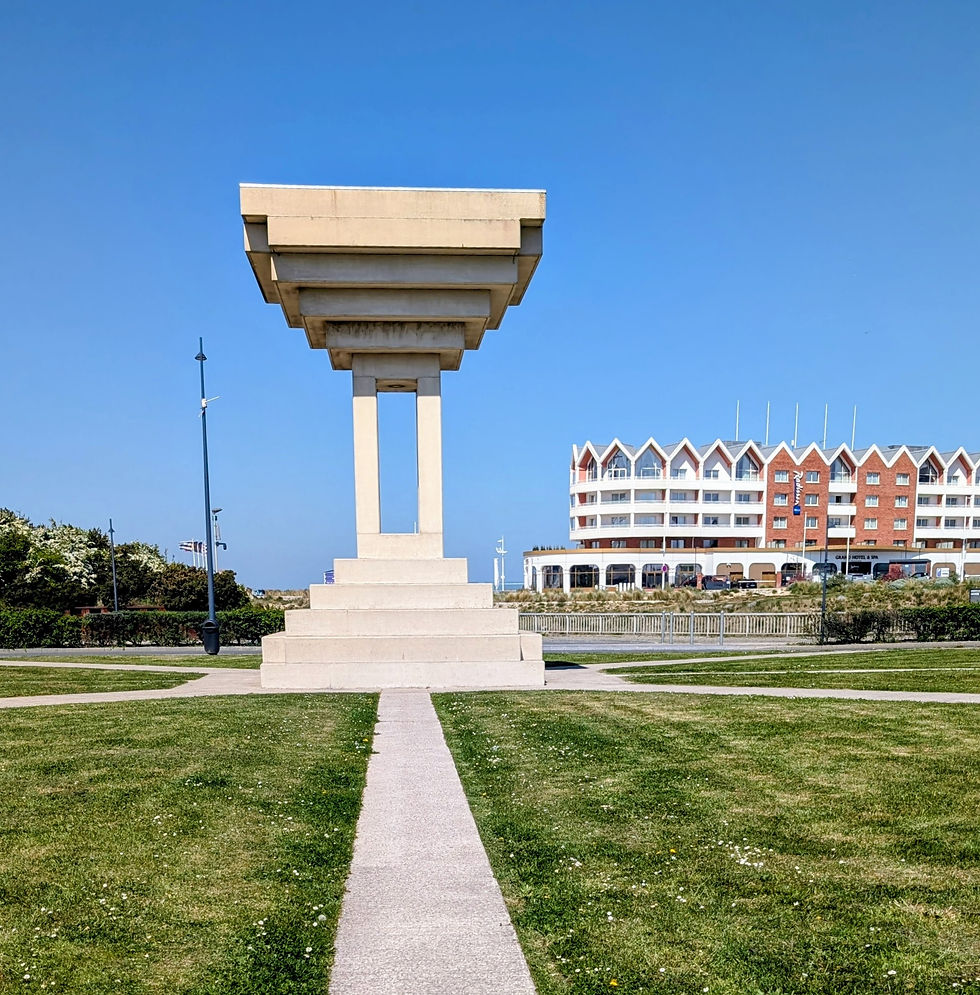
After completing our emotional tour of the museum and paying our respects at the beach and cemetery, we left the coastal city in the early afternoon, steering south toward Reims. A completely different chapter of our road trip was about to unfold: spending the next several days immersing ourselves in a brand-new region—diving headfirst into the ancient history, breathtaking cathedrals, and effervescent culinary delights of the historic Champagne region. Stay tuned for the next update!
If you enjoy the content and would like to be updated with new posts, become a member/subscribe (it's free!) or follow along on the RamblynJazz Facebook page, BlueSky, Pinterest, Twitter, and Instagram. You can help the blog grow by sharing the link with a travelling friend or through social media. I truly appreciate your comments and encourage you to share your thoughts below.


I've not stopped in Dunkirk even though I have driven past it a fair amount of times when I lived in the UK and went back and forth between it and Germany. It's one of those places that is really heavily loaded with history and the past and you need to be receptive for it. I admire you for deliberately going to Dunkirk and making it part of your trip. I also admire that you payed your respect at the beach and gave the city a chance to not only touch you by the WW II side but also by its UNESCO heritage.
Carolin | <a href="https://solotravelstory.com/">Solo Travel Story</a>
I knew a little about Operation Dynamo as there were a few ships from the Isle of Man who helped evacuate the troops but the museum would be an interesting visit. My nephew is currently taking a degree in War Studies and this is one of his areas of interest. He has a trip to the area as part of his studies in his next year so I'll pass your post on to him.
This is my kind of place to visit. I well and truly get into the history of places I go to, and Dunkirk would be no exception. Although as little far from where I'll be on my next France trip, I actually can't believe I haven't been here as my parents and I did a big historical trip around northern France when I was young visiting some of the battle sites. The museum would be a must for me. But I'm just in awe that anything there survived, so it's great to see the church and the statue of Jean Bart, truly remarkable
Although I know about Operation Dynamo and particularly about the little armada, to my shame I knew nothing about Dunkirk, so it was really interesting to discover the city. We live in Coventry, a city that also became synonymous with events from World War 2, so I can understand how the fabric of the city is inextricably intertwined with its history. We would definitely want to see the beach and visit the museum to learn more. It was interesting that Jean Bart's statue remains a symbol of resilience. You're so right that the best way for understanding Dunkirk is to visit with a mindful disposition.