


The Road North: Driving the Alaska Highway from Watson Lake to Whitehorse, Yukon

After weeks in a campervan, the world narrows to the steady hum of tires on asphalt, the roadside line of trees, and the slow, hypnotic roll of the odometer. Every summer road trip is distinct, but driving the legendary Alaska Highway demands a surrender to vast distances and open skies.
Looking back, it feels like another lifetime since I stood at Mile 0 in Dawson Creek, BC, snapping photos beneath the historic post that marks the start of this incredible engineering feat. I’ve carved my way through the dense northern forest from Dawson Creek to Fort Nelson, wound through breathtaking mountain corridors from Fort Nelson to Liard Hot Springs to soak tired muscles in thermal waters, and crossed the 60th parallel on the drive from Liard Hot Springs to Watson Lake.
Now, leaving behind the charming roadside oddity of Watson Lake’s Signpost Forest, I began the fourth leg of this epic journey: a roughly 440-kilometre trek west toward Whitehorse, Yukon. Along the way, I will explore rich Inland Tlingit heritage in the town of Teslin, then roll into the Yukon’s Wilderness capital, Whitehorse.

Table of Contents
The Drive: Watson Lake to Whitehorse
Spanning approximately 438 kilometres, this leg takes around five to five-and-a-half hours of pure driving time, though you will want to budget a full day for stops to enjoy the roadside views and historical markers along the way. While the road is a fully paved two-lane highway, driving in the North is never entirely predictable. Frost heaves are an inevitable part of the landscape. These rolling dips and sudden bumps, where permafrost shifts beneath the asphalt, can appear suddenly, so keep both hands on the wheel and your speed in check. Seasonal road crews are also common in summer; expect brief stretches of loose gravel, chip-seal, or single-lane queues with a pilot.
Before leaving Watson Lake, top up your fuel tank. Services thin out once you leave town, and aside from Teslin near the midway point, reliable fuel and food stops are few and far between until you near Whitehorse.

The scenery along this stretch traces wide river corridors, threads through dense stands of black spruce and pine, and teases you with dramatic glimpses of glaciated ridges in the distance. Keep your eyes peeled along the tree lines and grassy verges—wood bison, black bears, moose, and bald eagles frequently appear by the roadside.
The approach to Teslin delivers one of the drive's visual highlights: the Nisutlin Bay Bridge. At an impressive 584 metres, it is the longest water span on the entire Alaska Highway.

Midway Stop: Teslin
The small village of Teslin at Historic Milepost 804 is more than a convenient fuel stop. For centuries, this waterway was the traditional homeland of the Inland Tlingit (Tlingit Däna), who travelled inland from the coast to establish seasonal hunting camps, harvest salmon, and trade with neighbouring interior nations.
During the frenzy of the 1898 Klondike Gold Rush, Teslin became an alternate route to Dawson City. Eager stampeders travelled overland from Telegraph Creek or by Stikine River, building makeshift rafts and boats on Teslin Lake's shores to float north down the Teslin and Yukon Rivers toward the goldfields. Decades later, in 1942, the hasty, bulldozing construction of the Alaska Highway cut through this quiet settlement. The influx of US military personnel brought heavy machinery and unprecedented disruption.
Tlingit Heritage Centre
Today, the Teslin Tlingit Heritage Centre honours Indigenous culture and sits along the lakefront just five kilometres northwest of the village. It is easily one of the most enriching roadside detours on the highway.

On arrival, striking hand-carved totem poles greet you. Inside, the gallery showcases intricate beadwork, ceremonial button blankets, and thoughtful interpretive displays explaining the matrilineal clan system and the seasonal harvesting cycles that still define local life. Stepping out onto the boardwalk overlooking the tranquil grey-blue waters of Teslin Lake gives you a place to stretch your legs or enjoy a picnic.

Whitehorse: The Wilderness City
After hours of sweeping wilderness, Whitehorse welcomes travellers with an easygoing blend of pioneer grit and contemporary northern charm. Home to more than three-quarters of the territory’s population, it is known as "The Wilderness City".
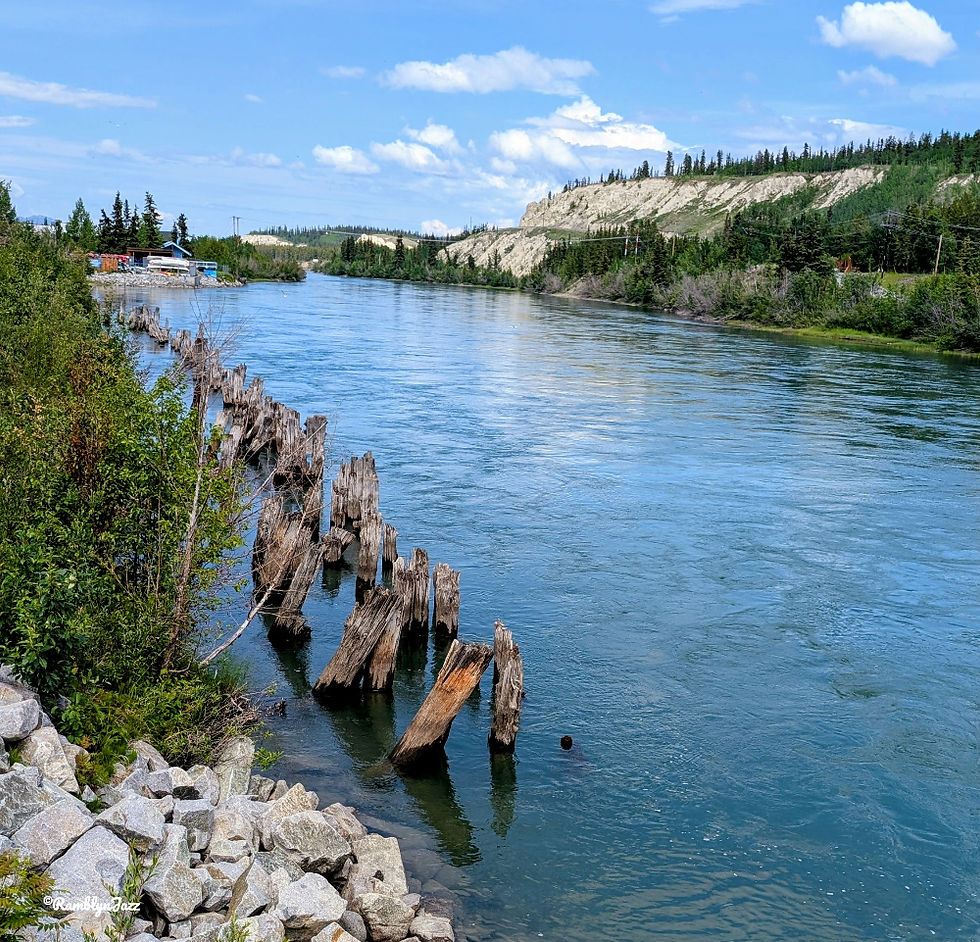
Long before it had an English name, this scenic river bend was a seasonal gathering place for the Kwanlin Dün First Nation and the Ta’an Kwäch’än Council, who fished the rich waters and crossed the surrounding ridges. Its colonial name, however, came from the nearby river rapids, whose cresting white spray reminded early prospectors of the flying manes of charging white horses.

During the frantic rush of 1898, stampeders who had hauled tons of gear across the Chilkoot or White Pass faced those dangerous rapids. Those who survived tied up just past the canyon, turning the settlement into a bustling transition point where rowed scows and rafts gave way to river sternwheelers bound for Dawson City. When the White Pass & Yukon Route railway linked Skagway to Whitehorse in 1900, the town became the vital gateway to the North.

In 1942, as fears over Pacific vulnerabilities mounted, the city became the primary nerve centre and staging ground for building the Alaska Highway. Virtually overnight, thousands of American soldiers, engineers, and civilian contractors poured in. The narrow-gauge railway hauled endless trainloads of bulldozers, steel, and fuel into Whitehorse, then distributed them north and south along the emerging pioneer road. That wartime boom also led to Dawson City's replacement as the territorial capital in 1953.

Whitehorse Yukon Highlights: What to See & Do
Start in town at the Yukon Visitor Reception Centre on 2nd Avenue. The staff are wonderfully welcoming and have up-to-the-minute trail updates and local wisdom. Be sure to pick up your free collectable Whitehorse sticker and a free copy of the Historical Walking Tour Map. The map guides you past the city’s colourful gold rush storefronts, preserved log cabins, and historic landmarks.

Millennium Trail
From downtown, head toward the water to enjoy the scenic Millennium Trail and waterfront walk. Stretching peacefully alongside the Yukon River, this paved pathway connects the city's green spaces and heritage landmarks. Part of the journey lets you hop aboard the charming vintage heritage streetcar, which trundles along the riverfront tracks and offers a delightfully nostalgic way to take in the river view.

SS Klondike National Historic Site
Sitting proudly in dry dock along the southern end of the waterfront path is the S.S. Klondike National Historic Site, the grand dame of the Yukon River. As the largest sternwheeler to ply the upper river between Whitehorse and Dawson City, this mammoth paddlewheeler carried silver lead ore, general cargo, and passengers through treacherous river bends until 1955. Although I couldn't tour the interior because it was undergoing extensive renovations during my visit, wandering around its gleaming white, multi-tiered decks and admiring its towering paddlewheel from the outside was still worthwhile.

Lumel Studios
Just a short walk away is Lumel Studios, which is easily one of the most vibrant and welcoming creative spaces in the North. This community glass-blowing studio radiates warmth, both literal and artistic, the moment you walk through the doors. Watching skilled local artisans shape glowing blobs of molten glass before roaring furnaces is mesmerizing, and their shelves are filled with exquisite, northern-inspired glass art—from delicate blown-glass caribou antlers to colourful auroras captured in crystal. They also offer classes.
The MacBride Museum of Yukon History
Next, head over to 1st Avenue and Wood Street to visit the MacBride Museum of Yukon History. Spanning more than half a city block, this sprawling complex weaves together thousands of years of human and natural history. You can trace northern stories from First Nations heritage and early trading posts through the delirium of the Klondike Gold Rush and the wartime frenzy of building the Alaska Highway. The museum blends modern galleries with preserved historic buildings, including an authentic 1900 telegraph office and a rustic log cabin used by territorial icons. Outside, historic steam engines and gold-panning troughs bring the gold rush era to life.

Yukon Wildlife Preserve
Finally, just a short drive northwest of the city, the Yukon Wildlife Preserve is an expansive 700-acre haven dedicated to northern mammal rehabilitation and education. While I could easily wax poetic about watching woodland caribou, mountain goats, and majestic muskoxen roam its vast habitats, I want to give this incredible conservation sanctuary the attention it deserves. Stay tuned, because I'll dedicate an entire in-depth feature to exploring the preserve in next week’s post!

Where to Eat: Downtown Whitehorse
After days of simple campervan cookery and roadside sandwiches, diving into the Whitehorse dining scene felt like an extraordinary indulgence. Nearly every traveller and local I met on my journey north insisted that I must eat brunch at The Burnt Toast Café. Having had it recommended at least a dozen times along the highway, my expectations were high. The café on 2nd Avenue is compact, unpretentious, and buzzing with morning banter. True to the warning, a noticeable lineup stretched out the front door, but the wait was worth it. Settling into a table and tucking into my brunch, I found hearty comfort food that made me forget the wait instantly. The selection of egg benedict dishes was quite astonishing.
Right next door is another local restaurant I'd heard a lot about: Klondike Rib & Salmon. Housed in two of the oldest remaining log structures in downtown Whitehorse, it feels like you’ve stepped straight into 1898. The interior is a delightful, cluttered museum of vintage trapping tools, gold pans, and historic relics, paired with a welcoming sourdough hospitality. Their menu leans unapologetically into northern comfort, serving everything from smoked ribs and tender wild salmon fillets to game dishes like elk sausage and bison burgers, all washed down with a local Yukon craft beer.

Final Thoughts
Whether you linger for a couple of days to wander the museums and river trails or use the city as a springboard for journeys deeper into the territory, Whitehorse captures your imagination and holds it tight.
If you enjoy the content and would like to be updated with new posts, become a member/subscribe (it's free!) or follow along on the RamblynJazz Facebook page, BlueSky, Pinterest, Twitter, and Instagram. You can help the blog grow by sharing the link with a travelling friend or through social media. I truly appreciate your comments and encourage you to share your thoughts below.


Comments